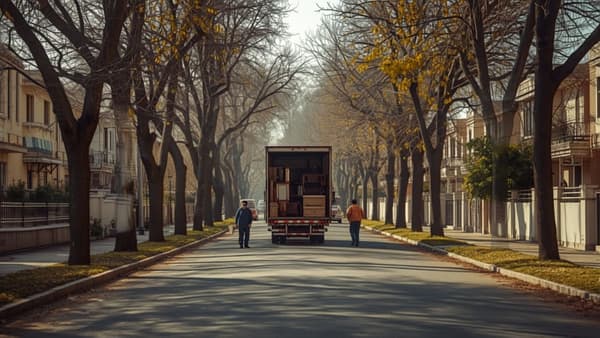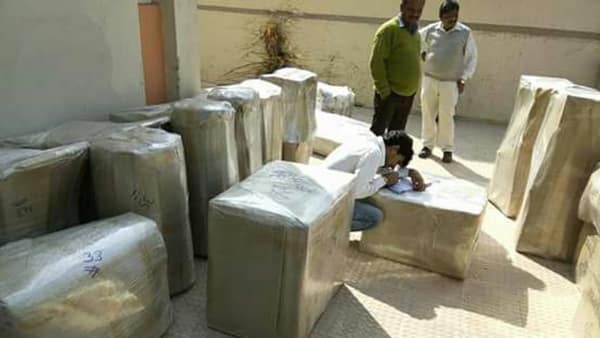
To shift a house in Varanasi's old city, plan for the truck to wait on the nearest road where it's allowed to stand, while the crew carries goods out by hand or on a small vehicle. Start at first light, avoid big festival and bathing days, and dismantle large furniture in the room before it ever reaches a narrow stairwell.
- No truck reaches most houses near the ghats, so goods move by hand or small vehicle to where it can stand.
- Start at first light, before shops open, and skip Sawan Mondays, Dev Deepawali and major bathing days.
- Dismantle takhts, beds and showcases upstairs, since old stone stairwells rarely leave room to turn big pieces.
- Keep cartons closed and indoors, because the monkeys on old city rooftops will open them.
Why the old quarter is a different kind of move
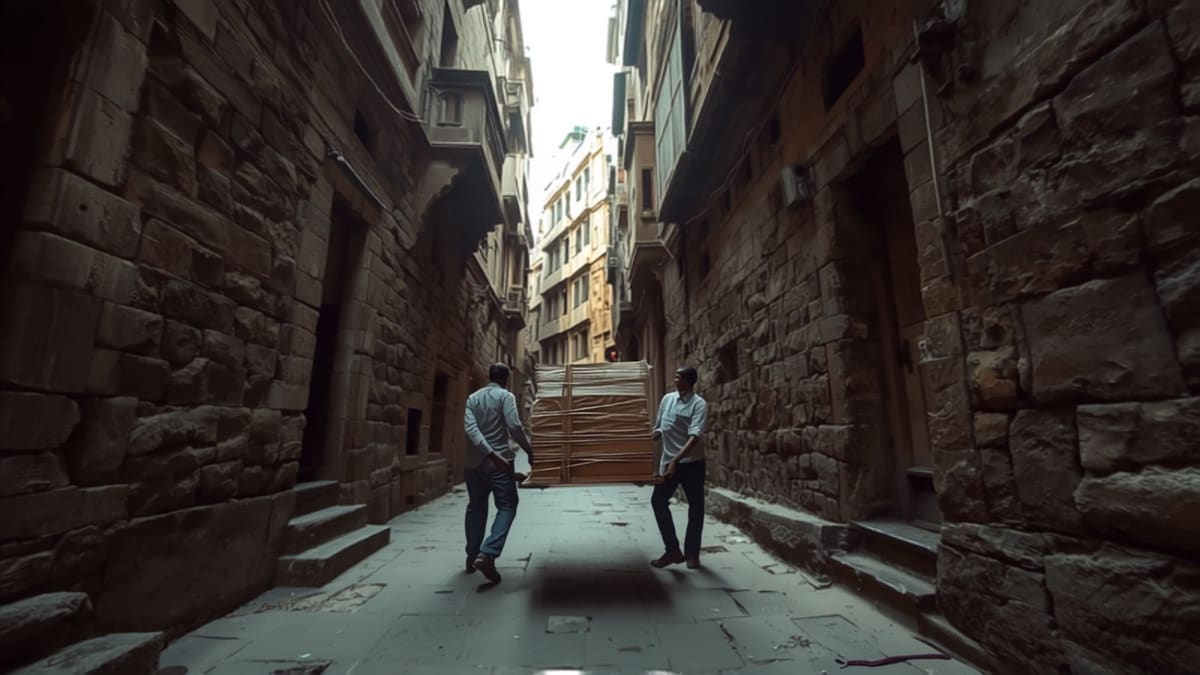
Most of old Banaras, the dense quarter behind the ghats, was built long before anyone thought about vehicles. Lanes run from Chowk and Godowlia down towards Dashashwamedh and Kedar Ghat, often just wide enough for a couple of people and a stray cow to squeeze past, and they turn every few metres. Houses are tall and narrow, with rooms stacked three or four floors high around a small courtyard, and the stairs are stone, steep and dark.
So a house shift here isn't really a truck job until the very end. It's a carrying job. On old city moves we plan the packing inside the house, the walk out through the gali to a point where a vehicle can stand, and the loading at that point without blocking the road for long. Each part needs its own people and its own time, and skimping on any one of them is what turns a morning job into a whole day.
How do goods get from the gali to the truck?
It depends on how deep in the house is and what the lane allows. For houses a couple of turns from a road, the crew simply carries cartons out, two people on each heavy piece and someone at every corner to warn oncoming scooters. Deeper in, we use a hand cart or a small electric loader where the lane is wide enough, and run it back and forth between the door and the truck. Near the ghats, some stretches are closed to vehicles at busy hours, so even a small loader may have to stop short and the last part is on foot.
The truck waits on the nearest road where it's permitted to stand, and one of our people stays with it the whole time. Nothing is left unattended at the roadside, not even for a minute. Before the move, our surveyor walks the real route from your door to that spot, counts the turns and steps, and notes any low arch or overhanging balcony. That's how crew size and the number of shuttle trips get worked out, and all of it goes into the written quote.
Stairwells, doorways and heavy furniture
Old Banaras stairwells are the part people underestimate. Steps are high and uneven, the turn at each landing is tight and there's often no railing. A wooden takht or a double bed that went up in pieces years ago won't come down whole, so we open it up in the room. Steel almirahs are emptied first and carried upright with straps. Glass-fronted showcases lose their glass before they move an inch, and each pane is wrapped on its own.
We look after the house as well as the goods. Door frames get padding at the corners, and heavy pieces come down one step at a time with a person below taking the weight. Now and then an item simply won't fit the stairs, like a big sofa bought after the house was built. Then we look at the roof or a wide window and lower it on ropes, but only if the crew leader is confident and you're comfortable with it. Otherwise the honest advice is to sell it or give it away.
Brass and copper utensils, idols from the puja room and old family photographs deserve cartons of their own. They go into our Perfect Box cartons with padding, labelled by room, so they're the first things you can find in the new house.
Packing inside a small, crowded house
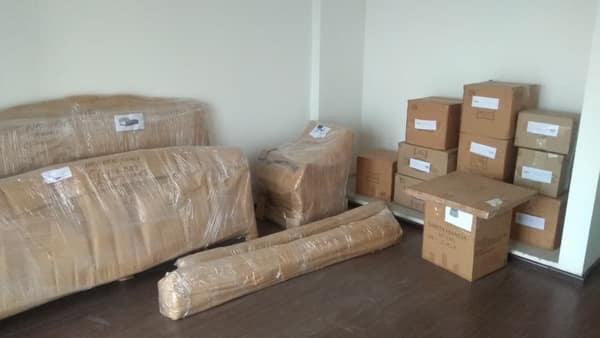
Old city homes rarely have a spare room to stack cartons in, so packing needs a sensible order. We start at the top floor and work down, so finished cartons collect near the stairs instead of blocking them. The kitchen is packed last, since most families cook until the night before. Books are heavy, so they go into small cartons that one person can carry down a narrow stair without knocking the walls.
Label every carton with the room and the floor it's going to at the new house. It sounds fussy, but when a three-storey Banaras house moves into a flat in Sigra or Lanka, it saves you from sorting everything on the floor of one room. Keep one bag aside with keys, medicines, the puja items you use daily and the property documents, and keep that bag with you rather than in the pile waiting in the gali.
Timing around aarti, bathing days and festivals
The calendar decides old city moves more than the weather does. Dashashwamedh fills up for the Ganga aarti every evening, so anything near that stretch should be loaded and gone by mid-afternoon. Sawan Mondays bring a flood of devotees heading for Kashi Vishwanath, and Mahashivratri, Dev Deepawali, Ganga Dussehra and bathing days like Makar Sankranti close roads and push barricades further out than usual. Chhath brings big crowds to the ghats too.
What works best on an ordinary day:
- Finish packing the day before, so moving day is only carrying and loading.
- Begin carrying at first light, before shutters go up and handcarts fill the lane.
- Pick a weekday, since weekends bring more visitors to the ghats and the temple area.
- Stay away from the weeks when the Ganga runs high, because lanes close to the river get wet, slippery steps.
- Tell the neighbours a day ahead, so bikes parked in the gali are moved before the crew turns up.
Rooftops, monkeys and small things that go wrong
A few problems are almost unique to this part of the city. Monkeys on the rooftops are quick to rip open a carton left on a terrace, so packed boxes stay inside and closed until they go down. A power cut can leave an old stairwell pitch dark, so our crew brings torches on old city jobs. Water tanks on the roof should be drained if you're taking them, and the cooler, charpai or plants kept up there need a place in the carrying order, not a last-minute scramble.
Moving out of the old city usually means moving somewhere roomier, like Sigra, Mahmoorganj, Lanka, Sunderpur or the Sarnath side. Those ends are easy for a truck, so the whole day's difficulty sits at the start. If you're going further, to Lucknow about 300 km away or Patna at about 250 km, goods usually reach in 1–2 days. Our packers and movers in Varanasi page has the wider details, and families heading to the state capital can read our Lucknow moving page.
For anything unusual, like a harmonium, a heavy brass urli or a wall of books, mention it at the free pre-move survey. We'd rather plan a heavy piece properly than improvise halfway down a staircase. You can book that visit through our contact page.
Book a free survey and get your price in writing. See our packers and movers service in Varanasi.
Varanasi moving questions, answered
Can packers and movers shift a house near Dashashwamedh Ghat?
Yes. The truck can't come close, so the crew packs inside the house and carries goods by hand or on a small loader to the nearest road where a vehicle can wait. Plan to finish by mid-afternoon, before crowds gather for the evening Ganga aarti, and avoid festival days, when barricades push vehicles even further away from the ghats.
How do movers bring furniture down narrow stairs in old Varanasi houses?
By taking it apart first. Takhts, double beds and showcases are dismantled in the room, glass is removed and wrapped separately, and almirahs are emptied and carried upright with straps. If something truly can't pass the stairs, the crew may lower it from a roof or window on ropes, but only when it's safe and you agree to it.
Which days should I avoid for shifting in Varanasi's old city?
Avoid Sawan Mondays, Mahashivratri, Dev Deepawali, Ganga Dussehra and bathing days like Makar Sankranti, because crowds and barricades slow every trip between your door and the truck. Weekends near the ghats are busier than weekdays as well. The monsoon weeks when the river is high are also harder for houses close to the water.
Does shifting from the old city cost more in Varanasi?
It often does, because hand-carrying through galis and dismantling furniture on steep stairs take more people and more hours. How much more depends on the distance from your door to the truck, the number of floors and what you're moving. Our surveyor walks that route during the free visit and puts everything in a written quote before you book.
How early should a move start in the old city of Varanasi?
As early as there's daylight. The lanes are at their emptiest before shops open and before handcarts, scooters and visitors fill them. Packing is best finished the evening before, so the morning is only for carrying and loading. With an early start, most small and medium homes can be out and on the road before the afternoon rush.