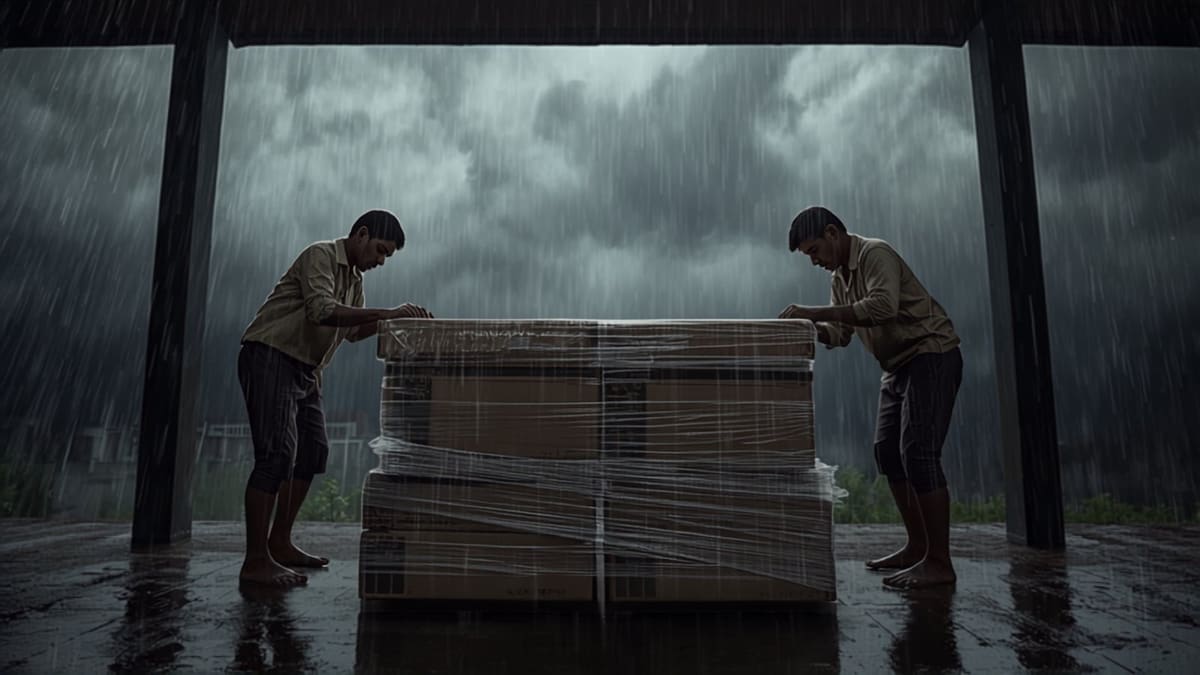
House shifting in Chennai during the northeast monsoon, roughly October to December, works if you plan for rain. Keep backup dates, check forecasts and local advisories in the days before, wrap mattresses, sofas and cartons in waterproof layers indoors, carry laptops and documents yourself, and avoid loading during a downpour or when either street is waterlogged.
- Most of Chennai's yearly rain falls between October and December, often in heavy spells lasting a few days.
- Low-lying streets near lakes, marshland and the rivers flood first, so check both addresses before fixing a date.
- Electronics that get damp shouldn't be switched on straight away. Let them dry out fully first.
- Agree backup dates with your landlord and both buildings, and shift the date if heavy rain is forecast.
Why Chennai's monsoon is different
Most of India plans moves around the June to September monsoon. Chennai runs the other way. The southwest monsoon gives the city only moderate rain, and the real downpours come with the northeast monsoon from about October to December, often pushed along by depressions and cyclones forming in the Bay of Bengal. The rain tends to come in spells, several very wet days, then a dry break, then another system.
The city is flat and close to sea level, and a lot of it was built over or beside old lakes and wetlands. When a heavy spell lands, water drains away slowly. Anyone who lived through the 2015 floods, or the flooding after Cyclone Michaung in December 2023, knows how quickly a normal street becomes a stream. For a house shift, the trouble usually shows up as wet goods between the door and the truck, closed roads and subways along the way, or a new home that takes in water.
Which areas get waterlogged first?
We won't pretend there's a neat list, because it changes with each storm and with new drainage work. In general terms, the places that struggle are those on low ground near the Pallikaranai marsh and the lakes of south Chennai, some pockets along the Adyar and Cooum rivers and the Buckingham Canal, and newer layouts on the southern and western edges where storm drains are still catching up. Older, slightly raised neighbourhoods tend to clear faster.
What really matters is your specific street, so do a little homework:
- Ask neighbours at the new address whether the road flooded last season, and for how long.
- Look at the pillars in the building's stilt parking. Old waterline stains tell you plenty.
- Check whether ground-floor flats have raised thresholds or sandbags stored nearby.
- Find out if the lift runs on a generator, since power is often switched off in flooded areas for safety.
- Note the route between the two homes and any subway on it that tends to close.
Packing so rain cannot get in
Cardboard and rain don't mix, and a wet carton loses its strength long before it looks damaged. On monsoon jobs in Chennai our crew packs on the assumption that everything will be rained on at least once:
- Mattresses, sofas and upholstered chairs are sealed in plastic inside the flat, with the seams taped.
- Cartons holding clothes, bedding and books get a plastic liner inside, then tape along every edge.
- Wooden furniture is wiped dry before wrapping, then covered with our Fabric Sheet against scratches and with plastic against rain.
- The truck floor is lined and the bottom row is kept off the deck, so water that runs in at the back can't soak it.
- Crockery and glass go into our Perfect Box cartons, which soak up the jolts of potholed, rain-damaged roads.
Loading only happens when it isn't pouring. If a heavy spell starts halfway, the crew stops, keeps wrapped goods under the building's cover and carries on when it eases. A short wait beats a truck full of soggy cartons.
Keeping electronics dry
TVs, laptops, music systems and the washing machine are what people worry about most, and rightly so. Moisture inside electronics doesn't always show until you switch them on.
Original boxes with their thermocol inserts are best. Without them, screens get foam, bubble wrap and a sealed plastic cover before going into a carton. Remotes, cables and small adapters go in zip bags labelled by device. Laptops, hard drives and cameras should travel with you, never in the truck. Tuck a few silica gel sachets in with anything that will sit in a carton for more than a day.
At the new house, if any electrical item has been exposed to damp, don't plug it in straight away. Unwrap it, leave it in a dry, airy room for a day, and only then switch it on. Before connecting anything, also make sure the new flat's sockets and DB box haven't taken water, especially on the ground floor.
Unpacking after a wet moving day
The job isn't over when the truck leaves. On a monsoon move, the first couple of days in the new flat decide whether anything picks up a musty smell. Open the cartons of clothes, bedding and books first, even if you don't put everything away yet. If a carton feels soft or cold to the touch, empty it straight away and spread the contents out under a fan.
Unwrap mattresses and sofas as soon as they're inside, and don't leave them in plastic overnight. The plastic that kept rain out on the road will now hold in any damp that crept under it. Wipe down wooden furniture and set it slightly away from outer walls, which stay cool and damp through the season in many Chennai buildings.
Leather bags, shoes and belts are usually the first things to spot with mould in this weather, so give them some air before they go into a closed wardrobe. And if your new home is on a lower floor, keep the most valuable cartons up on a table or cot rather than on the floor until the rain spell has passed.
When to move the date, and how
A move date in November is a plan, not a promise. When we book monsoon moves in Chennai, we note one or two fallback days with you, and it's worth doing the same with your landlord and both building offices. If the Regional Meteorological Centre or the city corporation puts out a heavy rain warning for your moving day, or your street is under water the evening before, it's time to shift the date.
When that happens:
- Leave packed cartons indoors on a raised surface, away from windows and balconies.
- If your lease ends before the new date, ask the owner in writing for a few extra days.
- If the new flat has taken in water, don't move in until floors and walls are dry. Our storage can hold your goods in the meantime.
- Rebook the lift slot and gate pass at the new building for the revised date.
January to March remains the easiest window in Chennai, so if your timing is flexible, that's when to move. If it isn't, the rain can be managed. Our Chennai packers and movers page covers routes and the rest of our services, and the free pre-move survey is a good time to settle backup dates.
Book a free survey and get your price in writing. See our packers and movers service in Chennai.
Chennai moving questions, answered
Should I avoid moving house in Chennai between October and December?
You don't have to avoid it, but it's the hardest stretch of the year for a Chennai move. Heavy spells can last days and leave low-lying streets waterlogged. If you have a choice, January to March is easier. If you don't, keep a backup date, watch forecasts closely and check that both homes stay dry in heavy rain.
How do packers protect electronics from rain during a move?
They use original boxes where possible, or wrap items in foam and bubble wrap with a sealed plastic cover before cartoning. Cables go in labelled zip bags and silica gel sachets absorb moisture. Laptops and hard drives should travel with you. If anything does get damp, let it dry for a full day before switching it on.
What if my street in Chennai is flooded on moving day?
Postpone. Loading in standing water risks the crew's safety and your goods, and trucks may not get through closed roads or subways anyway. Keep packed cartons indoors on a raised surface, speak to your move manager about a new date, and ask your landlord in writing for a few extra days if your lease is about to end.
Can wet cartons damage my things during a Chennai monsoon move?
Yes. Cardboard weakens when damp, so a soaked carton can collapse under the weight above it, and water seeps into clothes, books and bedding inside. That is why monsoon packing uses plastic liners, tape on every edge, a lined truck floor and loading only between downpours. Unpack anything that feels damp as soon as you can.
Is January a good time to shift house in Chennai?
January is one of the best months. The northeast monsoon has usually ended, the weather is cooler and roads are dry. Pongal falls in mid-January, though, and many people, drivers included, travel home that week, so book around it. February and March are also comfortable, before the heat and humidity build again in April.